
Accumulated surface dust
Fine dust, fibres, hair and other particles can collect along seams, edges and frequently used sleeping areas.
Mattresses collect dust, skin particles, body oils, drink marks, pet hair and everyday residues that cannot always be removed through regular vacuuming alone. RCL provides mobile mattress cleaning across London, with the treatment selected according to the mattress fabric, construction, staining, condition and available drying time.
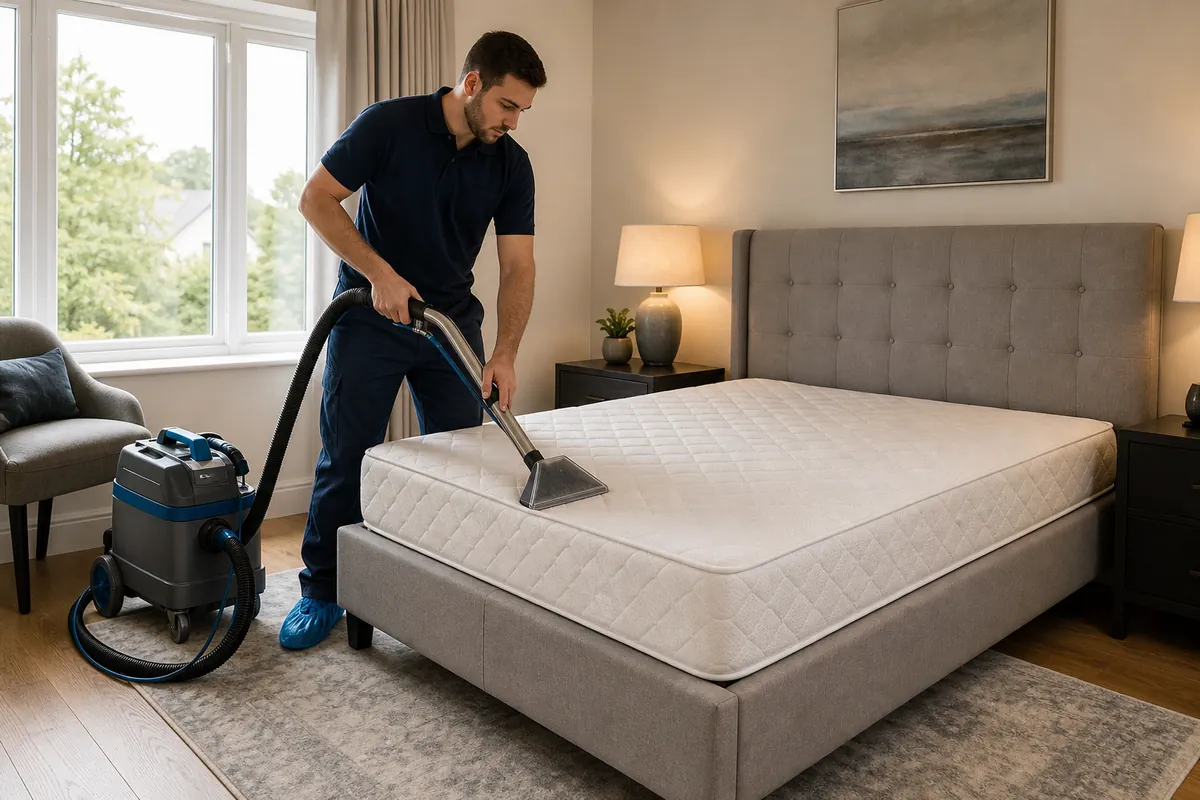
The method is selected according to the mattress rather than using one process for every item.
Mattress cleaning is intended to remove loose particles, improve the appearance of selected marks and refresh the accessible textile surface. The service can be useful after long-term use, accidental spills, tenancy changes, guest stays or periods when the mattress has been stored.
Before cleaning, we ask about the mattress size, age, fabric, staining, odours, previous products and available ventilation. This helps us explain what can be treated safely and what limitations may remain after cleaning.
The service is commonly requested for mattresses affected by normal sleeping use, accidental marks and changes between occupants.
Fine dust, fibres, hair and other particles can collect along seams, edges and frequently used sleeping areas.
Tea, coffee, water and food spills may leave visible marks that require controlled spot preparation before wider cleaning.
Cleaning can refresh a mattress surface affected by regular sleeping, guest use or prolonged periods without professional treatment.
Landlords, tenants and property managers may arrange mattress cleaning during move-in, move-out or short-let turnaround work.
Pet hair and selected surface odours may be reduced, although deeper contamination can require additional treatment or may remain limited.
Mattresses kept in storage may collect dust, stale residues and surface marks before they are returned to regular use.
The mattress is assessed before moisture, chemistry or extraction equipment is used.
The visible textile surface is checked for sensitivity, discolouration and previous wear.
Quilting, foam layers, padding and stitched sections can affect how much moisture can be used safely.
Food, drinks, bodily fluids, oils and unknown chemicals can require different treatment.
Tears, thinning fabric, exposed filling and damaged seams are noted before cleaning.
Surface odour is considered separately from contamination that may have entered deeper internal layers.
Room temperature, airflow, ventilation and the required return-to-use time are included in the cleaning plan.
The exact process may change depending on the fabric, staining, construction and drying requirements of the mattress.
Deep internal contamination, extensive mould, pest infestation or serious structural damage may be outside the scope of standard mattress cleaning.
The mattress surface, seams, edges, stains and visible wear are reviewed before treatment.
Loose dust, hair and surface debris are removed where appropriate before moisture is introduced.
Selected marks are treated according to the stain type, age and fabric condition.
Extraction or another suitable low-moisture process is used according to the inspection findings.
The surface is checked and guidance is provided for airflow, bedding replacement and return to use.
Professional cleaning may improve the visible mattress surface, reduce loose soil, refresh general appearance and treat selected everyday marks.
The final result depends on the stain type, age, previous treatments, fabric condition and whether contamination has entered deeper internal layers.
The prices below are initial guides. The final quotation depends on size, condition, staining, access and the selected cleaning process.
Inspection and suitable surface cleaning for a standard single mattress.
Inspection, stain review and selected cleaning for a double mattress.
Cleaning planned around the larger surface area and mattress condition.
Assessment and treatment for larger mattresses, subject to access.
Heavy staining, additional spot treatment, parking, congestion charges, minimum booking values or difficult access may affect the final quotation.
Remove sheets, protectors, pillows and other bedding.
Identify known stains and explain what caused them.
Mention any stain removers or previous cleaning products.
Clear enough working space around the bed.
Provide parking, lift or staircase access details.
Keep windows accessible for ventilation after cleaning.
These answers provide general guidance. The correct treatment and drying time depend on the individual mattress.
The quotation depends on mattress size, staining, condition, access and the amount of treatment required. Published prices are starting guides.
Controlled extraction may be used where suitable, but the process is selected according to the fabric, construction, staining and drying conditions.
No. Older marks, bleaching, colour loss, previous chemicals and deep contamination can limit the result.
Surface marks and odour may improve, but urine that has entered deep foam or internal layers may not be fully removable through standard surface cleaning.
Drying depends on the mattress material, treatment, room temperature, ventilation and seasonal humidity. The mattress should not be covered or used until sufficiently dry.
This depends on the mattress weight, construction, condition and whether both sides are designed for sleeping use. Access should be discussed before the appointment.
Yes. Mobile appointments may be arranged for rental properties, managed accommodation, guest rooms, offices and other local workplaces, subject to access and availability.
Coverage is arranged across London and selected M25 districts, subject to the complete postcode, parking, property access and appointment availability.
Send the mattress size, photographs of any marks, details of previous products and the complete postcode. We can then provide initial guidance and explain the likely treatment options.