
Initial inspection
The fabric, care label, construction, loose areas, fading, stains and general wear are reviewed before treatment.
Sofas collect everyday dust, body oils, food marks, pet hair and airborne soil, but different fabrics do not respond safely to the same cleaning process. We inspect the upholstery, filling, construction, colour stability and existing marks before selecting an appropriate treatment.
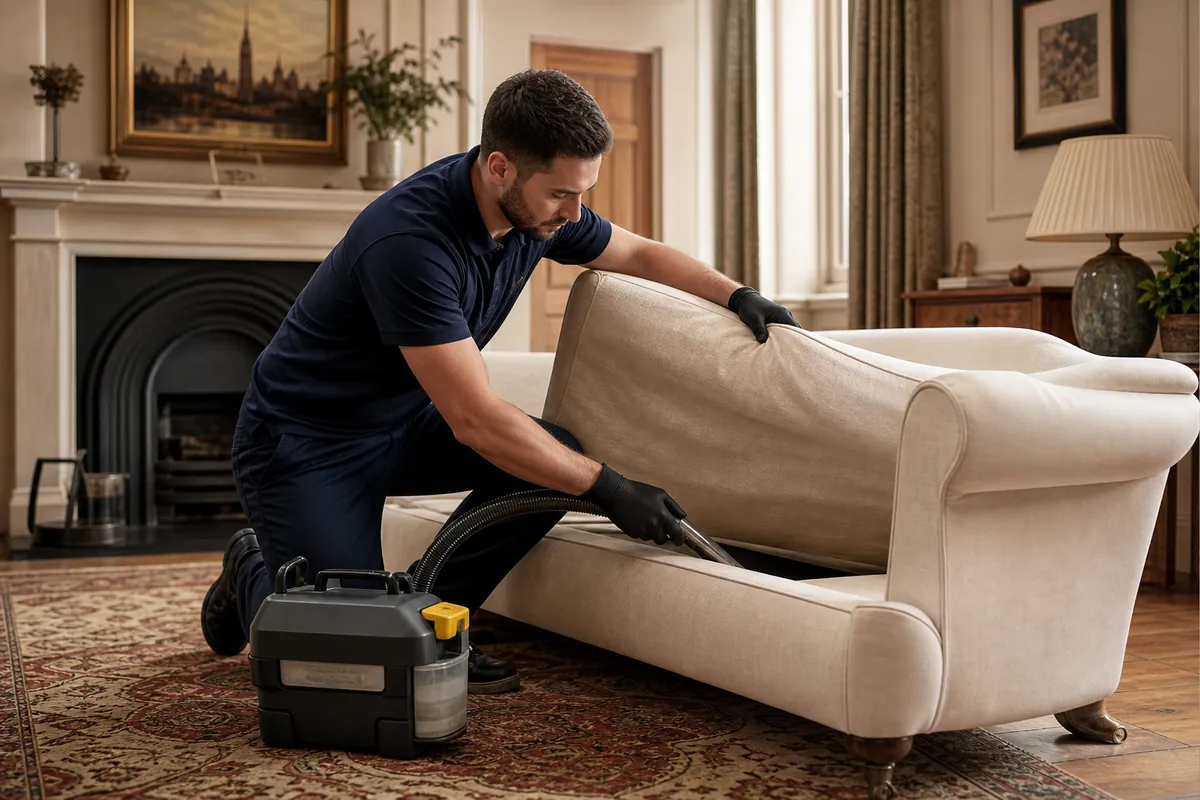
A modern synthetic sofa, a cotton blend, a linen cover and a delicate natural-fibre upholstery may all require different levels of moisture, agitation and cleaning chemistry. Previous stain products, sunlight fading, loose seams and weakened fabric can also affect what can be treated safely.
Before booking, we ask for photographs, the approximate sofa size, the number of seats, the fabric information if known and details of any stains or odours. Access, parking, lifts, ventilation and the required return-to-use time are considered as part of the service plan.
The exact process varies by fabric and condition, but the main decision stages remain consistent.
The fabric, care label, construction, loose areas, fading, stains and general wear are reviewed before treatment.
Dry soil, crumbs, pet hair and debris are removed from suitable surfaces, seams and accessible cushion areas.
Suitable marks and heavily used areas may receive controlled pre-treatment based on the fabric and contamination.
Extraction, low-moisture cleaning or another suitable route is selected after the inspection and testing stage.
The sofa is cleaned with attention to moisture levels, filling, seams, piping and safe drying conditions.
You receive practical advice about airflow, cushion placement, foot traffic, pets and when the sofa can be used again.
The safest method depends on more than the visible fabric. Cushion fillings, backing materials, seams, buttons, piping and internal construction may all influence the amount of moisture and agitation that can be used.
Controlled hot-water extraction may be considered for tested durable upholstery. Low-moisture cleaning may suit selected maintenance cases, while more sensitive fabrics may require a cautious or specialist approach.
Ask about your sofaConsidered for tested fabrics where rinsing and soil removal can be completed safely.
May be suitable for selected fabrics, lighter maintenance cleaning or reduced drying requirements.
Used cautiously where the stain, fabric and previous treatments allow localised work.
Delicate, unstable or specialist upholstery may require a different service route.
Results depend on the contaminant, fabric, age of the mark and any previous household products.
Tea, coffee, juice, sauces and dining marks may respond to treatment, but colour change or old residues can remain.
Pet hair, surface soil and some odours may improve, although deep contamination may affect cushions and internal fillings.
Armrests, head areas and seat edges often darken through repeated use and may require additional controlled treatment.
Household sprays, detergents and stain removers can leave residue, bleaching or colour change that cleaning cannot reverse.
Professional cleaning cannot repair worn fabric, sun fading, torn seams, missing colour, damaged filling or permanent chemical change.
Final prices depend on size, fabric, loose cushions, staining, access and the treatment selected after assessment.
Fabric assessment, suitable cleaning and drying guidance.
For suitable chairs, sofa seats and other upholstered items.
Based on size, material, condition and treatment requirements.
Quantity, filling, covers and drying requirements are considered.
Starting prices are general guides and do not represent a guaranteed final quotation.
Send photographs and your postcode for more specific guidance about your sofa.
Request an AssessmentThe quotation depends on the sofa size, number of seats, fabric, loose cushions, condition, staining and access requirements.
No. Fabric, colour stability, construction and filling materials must be considered before a wet-cleaning process is selected.
No. Some stains may be permanent because of age, chemical damage, colour loss or changes within the fibre.
Drying depends on the fabric, method, filling, extraction, ventilation, room temperature and seasonal conditions.
Loose cushions should normally be shown in the initial photographs so their covers, filling and condition can be considered.
Yes, subject to postcode, parking, lift access, building rules and appointment availability.
Include the number of seats, loose cushions, fabric information, stain details and your full London postcode.