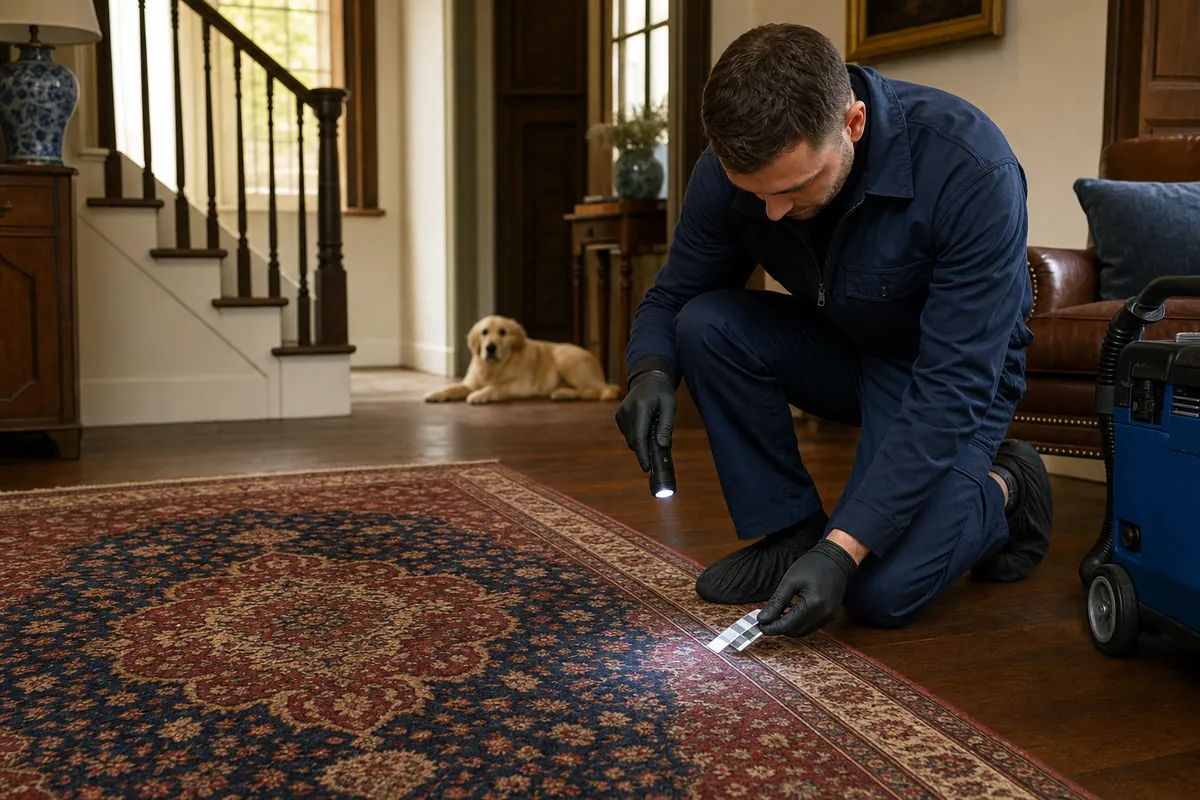
A known pet incident needs a clear assessment, not a blanket promise. We visit your Wimbledon property with portable equipment to inspect the rug, discuss the affected area and carry out suitable cleaning on site. Local treatment is connected with general soil removal, machine recovery and practical drying information for the room.
Mobile service in Wimbledon · Cleaning method agreed after inspection
Pet-related concerns assessed as part of a proper rug clean
When a pet incident prompts the booking, we look at the affected area and the rug as a whole. A visible mark, an odour observation and ordinary accumulated soil may each need different attention. We keep those concerns clear so you understand the work available and its limits. Our Wimbledon service is carried out at your property, with portable cleaning machines and a treatment selected after we inspect the actual textile and supporting construction.
Before quoting, we ask about the rug’s approximate size, known material and incident history. Photographs help show the location within the whole item, while previous products are relevant to the assessment. We also agree furniture movement and confirm equipment access. On the visit, suitable preparation and local work lead into compatible cleaning and recovery. At completion, we explain the response and the room conditions needed while the rug dries, without implying that cleaning the accessible textile automatically resolves every possible source beneath it.
Mobile serviceLondon and the surrounding M25 area
Material checksFibres and dyes assessed before treatment
Clear pricingPublished starting prices with a confirmed quote
Open dailyMonday–Sunday, 07:00–19:00
We establish what is known about the incident
We ask where the incident occurred, whether there have been repeated events and what products have already been used. This helps us understand the request, but we do not assume the visible edge of a mark describes its complete extent. We examine the affected pile and the accessible supporting materials, considering any odour observation separately from the stain. The purpose is to define a realistic scope before treatment rather than promise complete removal based only on a photograph or a description.
We also discuss the wider condition of the rug. A local incident can sit within a textile that carries everyday dust, grit and traffic soil, and those concerns remain part of the agreed clean. We explain the distinction between treating a compatible deposit and reversing any lasting colour or fibre change. Where the source may involve materials beneath the accessible rug, we identify that limitation rather than suggesting that work on the visible face must address every part of the problem.
Material checks determine the suitable response
The proposed treatment has to suit the rug as well as the incident. We inspect the fibres, backing, edges and any repairs, with relevant colour checks where appropriate. Those findings inform compatible products, moisture and machine action. A delicate patterned rug and a robust synthetic piece can need different decisions even when the same type of incident is reported. We explain the process selected for the actual item so you are not expected to choose technical settings or products yourself.
If a proposed machine method is unsuitable for a delicate or weakened construction, we explain that before agreeing work. We also consider existing wear and any altered colour around the affected area. Those changes may remain after contamination has been cleaned, and stronger treatment is not automatically a safe way to reverse them. This assessment gives the service a useful boundary: focused work on compatible soil and deposits, within the condition and accessible construction of the rug being treated.
What we consider after a known pet incident
Detail
Our assessment
What it clarifies
Incident history
Location and repeated events
Scope of the concern
Previous products
Known earlier applications
Treatment decisions
Rug construction
Pile, backing and strength
Suitable machine work
Accessible source
Face and relevant supporting materials
Realistic removal expectations
Preparation removes ordinary loose material first
Before the wet stages, we carry out appropriate dry preparation across the accessible area. Loose particles and everyday debris are removed with equipment action chosen for the textile, taking care around fringes and vulnerable edges. A pet-related concern does not make this stage irrelevant; ordinary material elsewhere in the pile still needs removal. Preparing the wider rug helps the following clean address its overall condition rather than concentrating all effort on one patch while leaving surrounding loose soil untreated.
We use the clearer surface to distinguish remaining local deposits from wear, pile direction and other differences. The preparation is not expected to resolve a known incident by itself, nor is repeated force used to make every section look the same. Its task is to remove accessible loose matter and provide a sound starting point for compatible local treatment and the broader clean. That keeps the service organised as a sequence of purposeful stages, each contributing to the removal work.
Illustrative image of attention to an assessed pet-related mark.
Local treatment is selected with realistic expectations
We choose suitable products for the assessed concern and apply them in a controlled way, allowing appropriate working time. The material response and known product history guide the decision. Where the textile permits, controlled action assists the treatment in releasing compatible deposits. We explain what that work is intended to achieve on the accessible area, keeping stain attention and odour expectations clear rather than presenting one product application as proof that every possible source has been dealt with.
Some incidents can leave lasting changes in dye or fibre condition, and repeated events may affect more than the visible face. We do not guarantee that a mark or odour will disappear completely. We still carry out useful treatment where suitable, with the scope and limitations explained before proceeding. This gives you a realistic basis for deciding on the service and understanding the result, instead of relying on an absolute promise that ignores the rug’s construction, condition and supporting materials.
The broader clean addresses soil beyond the incident
For a suitable rug, we apply compatible cleaning solution across the agreed accessible area. The aim is to loosen attached contamination within the pile so it can be recovered with the machine. Application and working action are managed around the fibres, backing and current strength. We do not increase the amount of solution automatically because an incident sounds difficult. The treatment remains controlled, with the assessment guiding how we work on both the local concern and ordinary general soiling.
The practical setup is part of that control. We examine the supporting floor and consider suitable protection for surrounding surfaces before wet work. Furniture movement is agreed beforehand, and any area still covered is identified as an access restriction. We organise the portable equipment within the room and carry out the service there. This lets the cleaning follow a consistent sequence with the room arrangement understood, rather than improvising movement or assuming the rug has no surface underneath it to account for.
Illustrative image of machine cleaning at a property.
Machine extraction removes the released contamination
Recovery collects the used solution together with the soil and compatible deposits loosened during treatment. We work through the included area in controlled passes, considering overlap, pile and construction. This removal stage connects the earlier preparation and product work with taking material away from the textile. Simply making the area damp or introducing a fragrance would not complete the cleaning process. We explain the function of recovery so you understand the work the portable machine performs at your property.
Where appropriate, additional recovery passes collect further moisture without automatically applying more solution. We monitor the response rather than repeating the same wet treatment whenever a difference remains. A lasting colour change or worn patch needs explanation, not an assumption that another pass must resolve it. The aim is a properly completed removal process within the agreed scope, followed by drying conditions appropriate to the rug and room. Any continuing uncertainty about the incident is kept clear in the completion discussion.
We review the affected area and the overall result
After cleaning, we revisit the known incident and explain the response visible at that stage. We also check the broader cleaned area and any other priority marks, with suitable pile finishing where appropriate. The damp appearance is not confused with the final dry result: colour, texture and pile direction can influence what you see immediately. We identify any remaining limitation directly, including where lasting damage or material outside the accessible construction affects what the service can reasonably achieve.
If someone else is present on your behalf, we make sure they understand the included work and the observations discussed. You can then relate any later question after drying to the specific rug and area treated. We keep odour claims realistic rather than treating a temporary scent impression as proof of permanent resolution. The useful outcome is a clear account of the cleaning performed and the response of the textile, with the source and scope considered honestly throughout the visit.
How local work connects with the clean
Stage
What we do
Purpose
Preparation
Remove accessible loose debris
Prepares the wider rug
Local treatment
Apply compatible selected products
Targets assessed deposits
Recovery
Extract released soil and solution
Completes removal
Review
Explain response and drying
Clarifies result and conditions
Drying conditions are explained for the household
The rug continues drying at home after the machine work. We discuss ventilation, access and furniture contact in relation to the textile, treatment and room airflow. These factors affect the time involved, so we do not promise one exact drying period for every item. The household also needs to understand the relevant conditions before normal use resumes. Where furniture was moved by agreement, we explain what is needed before the arrangement is restored around the treated area.
When booking, we confirm parking, stairs or lift access and the equipment route, along with the list of rugs or fitted carpet included. Each item is assessed individually so one process is not automatically extended to another construction. This keeps the quotation and working order clear. We finish by connecting the result, any remaining limitation and the immediate drying arrangements, giving the person managing the room practical next steps that fit the property and the service completed there.
Price guide
Starting prices for Wimbledon
Published starting prices; the final quote reflects the rug and access.
For a booking in Wimbledon, include your full postcode and property access information. The map shows the service area.
Local postcode districts: SW19, SW20. We confirm the visit against your full address.
Planning your Wimbledon appointment
We confirm the included items, address and practical access route before the visit. Furniture restrictions and any known incident details help us organise the equipment and the defined on-site work.
Published customer feedback
Reviews shown to Wimbledon customers
“Highly professional and efficient service. They cleaned two rugs at my flat and even gave advice on long-term care. Great value for money and a friendly team.”
“I booked a last-minute clean before guests arrived, and they delivered beyond expectations. The rug looks brand new!”
Stains and odour observations kept clear
We assess these concerns individually and explain what the accessible treatment can address. That makes the scope more useful than an unsupported promise based only on the incident’s name.
A practical completion account
We review the treated area, general clean and any remaining limitations. You also receive drying and room-use information relevant to the rug and the work carried out.
Yes. We discuss the incident, earlier products and the rug’s construction before explaining suitable local work. The scope and expectations depend on what has been affected and what is accessible.
Can you guarantee removal of every odour?
No. An odour source may involve supporting materials or parts outside the accessible rug. We explain realistic expectations rather than claiming that cleaning the face always resolves every possible cause.
Is cleaning carried out at my Wimbledon property?
Yes. We bring portable machines to the address and complete the agreed treatment there. The service includes assessment, preparation, suitable cleaning, recovery and a final explanation.
Will the rest of the rug be cleaned too?
We agree the scope in the quotation. Where the accessible rug is included, the local incident receives focused attention within a broader clean addressing ordinary soil and particles.
Can an old yellow mark be removed completely?
We assess the affected fibres and known history. Some contamination may respond to treatment, but dye or fibre changes can be permanent. We explain those limits before agreeing the work.
Can you treat a delicate rug after a pet incident?
We inspect construction, strength and relevant colour response before choosing a method. If proposed machine treatment is unsuitable, we explain that rather than applying the same response to every rug.
Next step in Wimbledon
Discuss rug cleaning at your Wimbledon property
Tell us about the rug, the known incident and any earlier products. We will discuss suitable on-site work, practical arrangements and a quotation for the agreed cleaning scope.